

research PROJECT
Multi-Spectral Imaging Carbon Observatory (MUSICO)
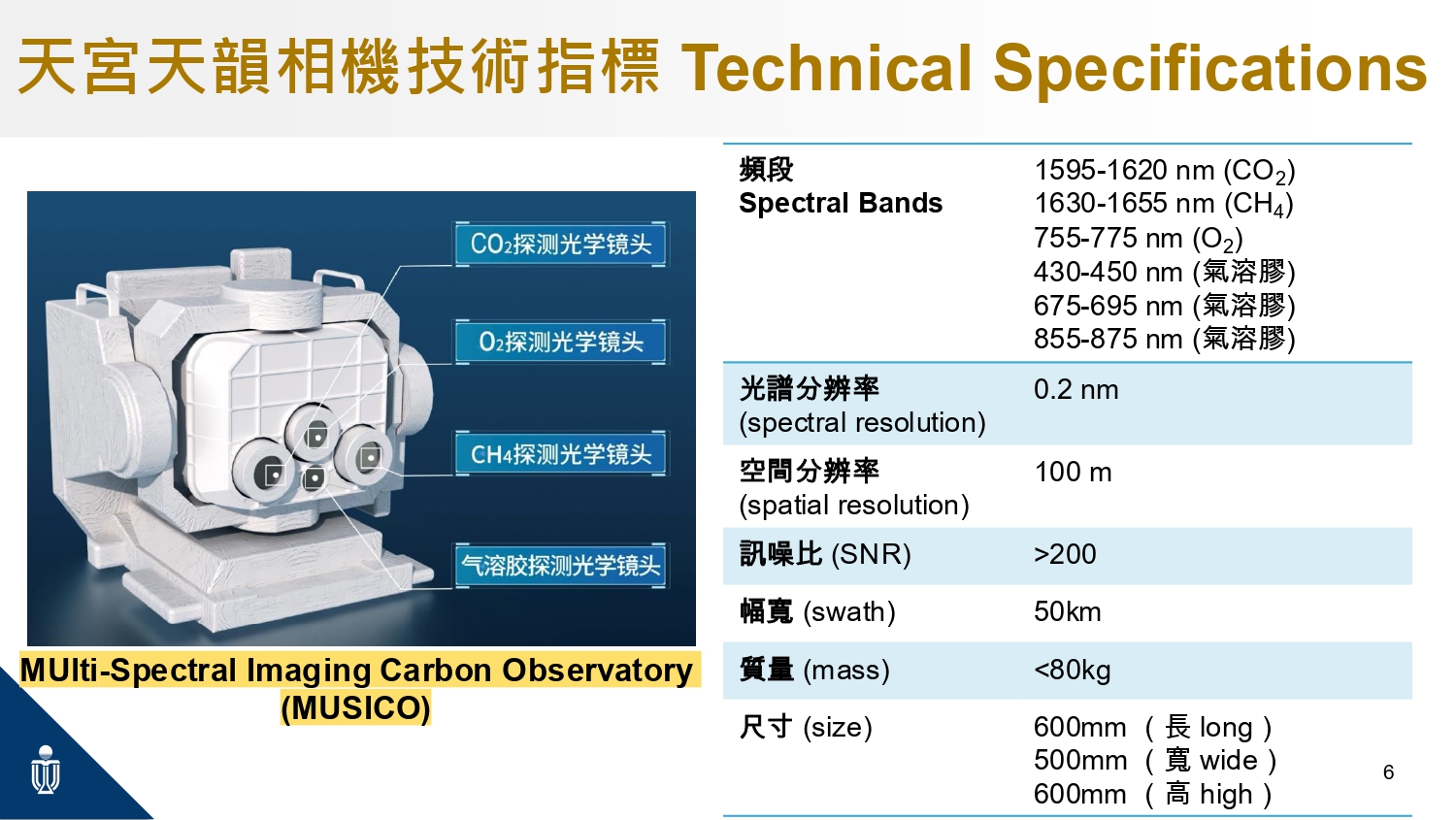
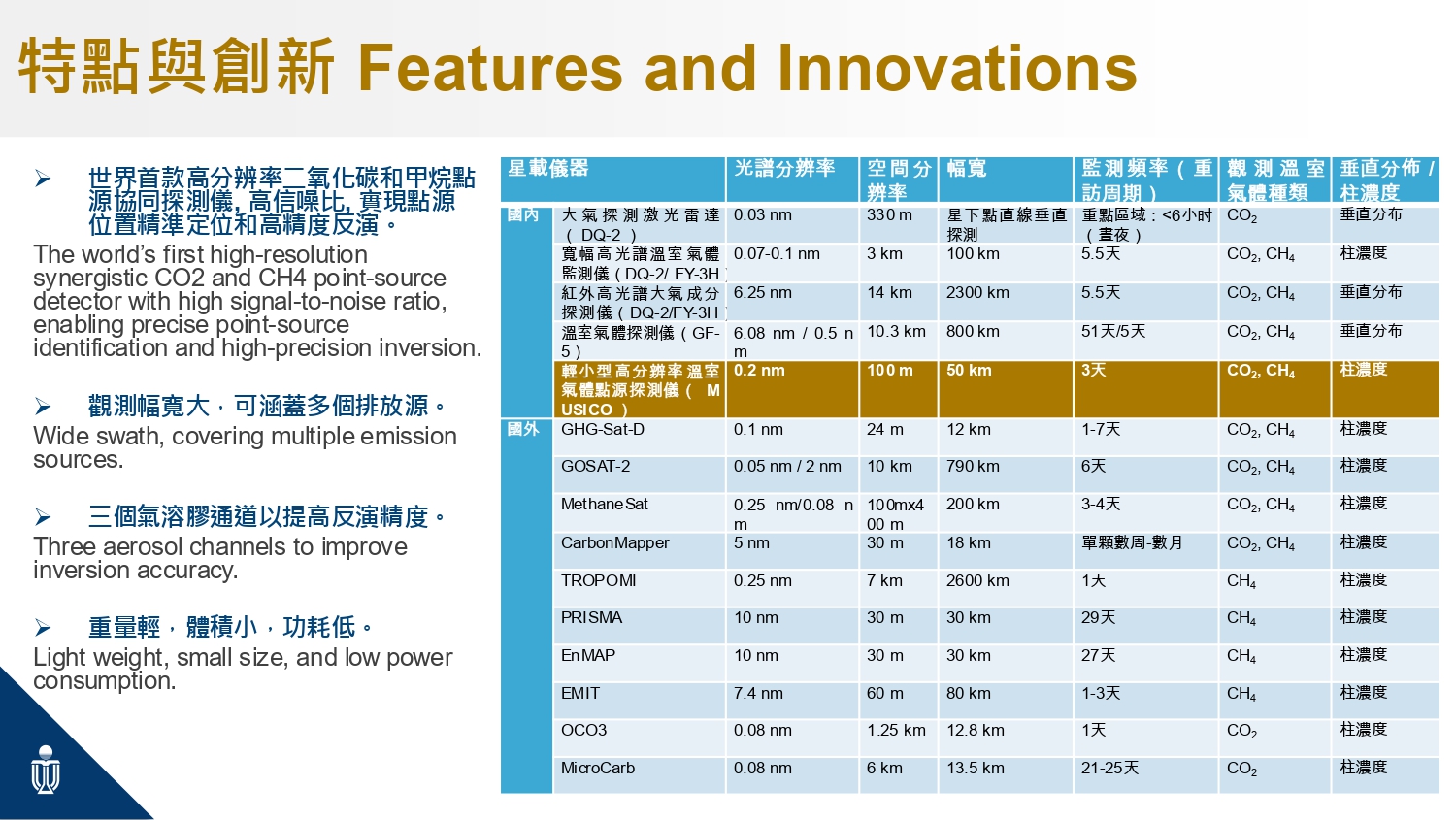
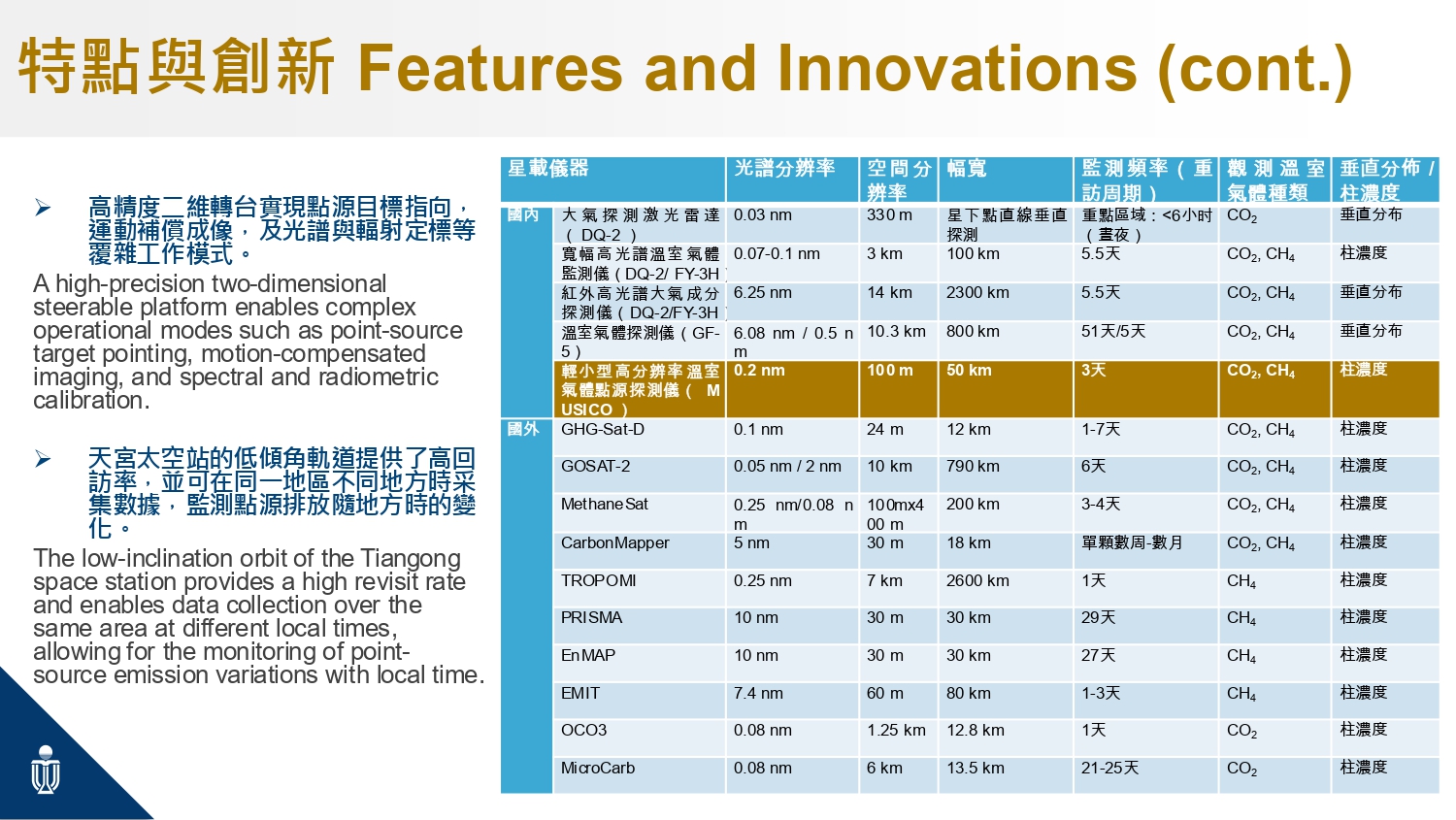
First Batch of Hong Kong Images Captured by "MUSICO"
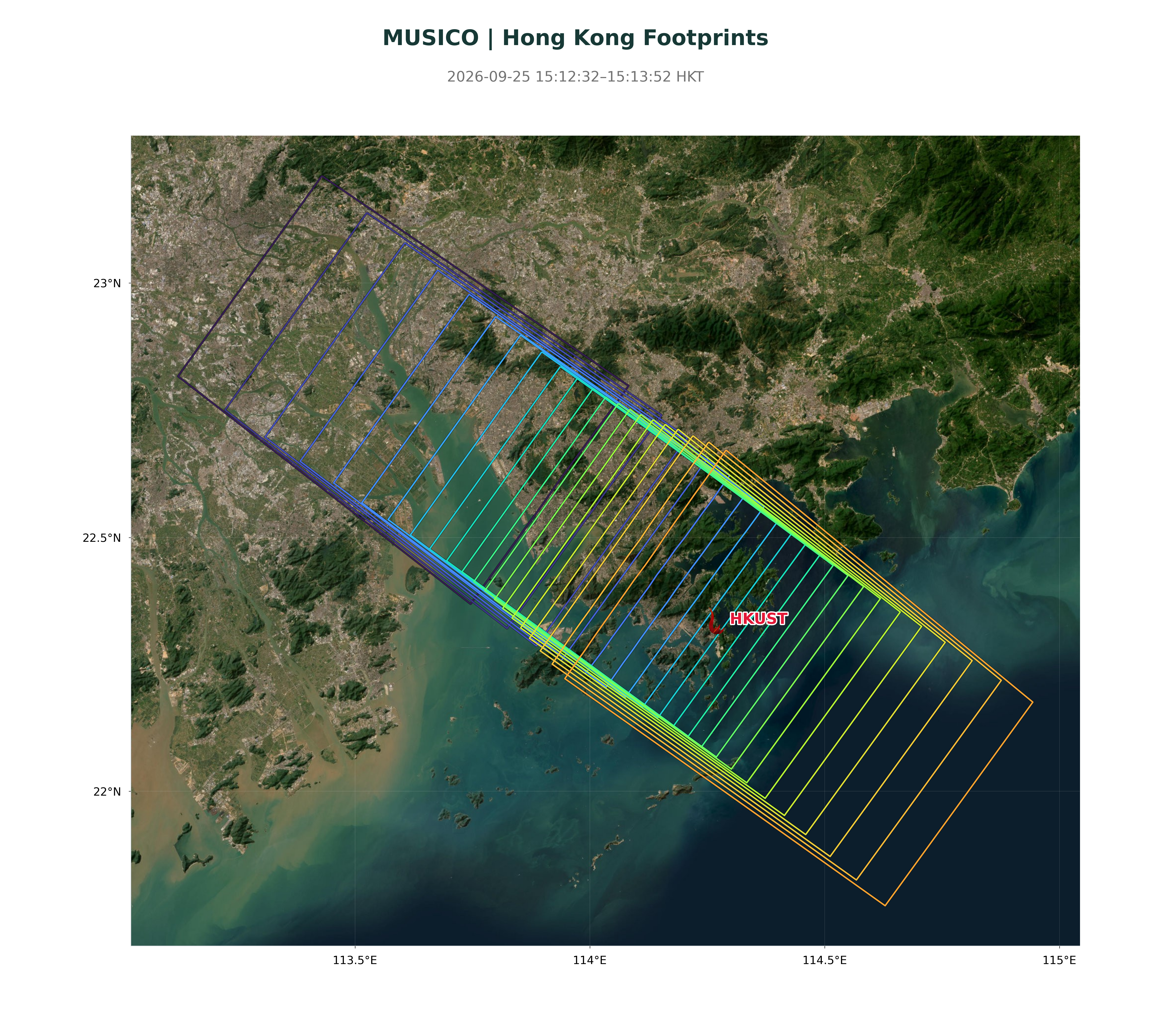
The Tiangong Space Station operates in low Earth orbit at an altitude of approximately 400 km above the Earth's surface, with an orbital inclination of about 41.5 degrees. As the space station completes one orbit around the Earth every 90 minutes, combined with the effects of the Earth's rotation, its ground track shifts westward with each pass. As a result, the space station does not fly over the same location along the same trajectory every day.
The picture shows the ground track of MUSICO during its pass over the Pearl River Estuary and most parts of Hong Kong on 25 September 2026.
Remote sensing image of Hong Kong captured by MUSICO's carbon dioxide sensor. Variations in image brightness are influenced by factors including surface reflectance, atmospheric conditions, and cloud cover. The brighter region in the upper-left corner is primarily caused by cloud reflection. Because cloud tops have a high reflectance to sunlight, they appear as higher radiance values in the image.
Image of Hong Kong captured by MUSICO's methane sensor. The color variations represent different radiance intensities received by the instrument and provide fundamental data for analyzing greenhouse gas distributions.
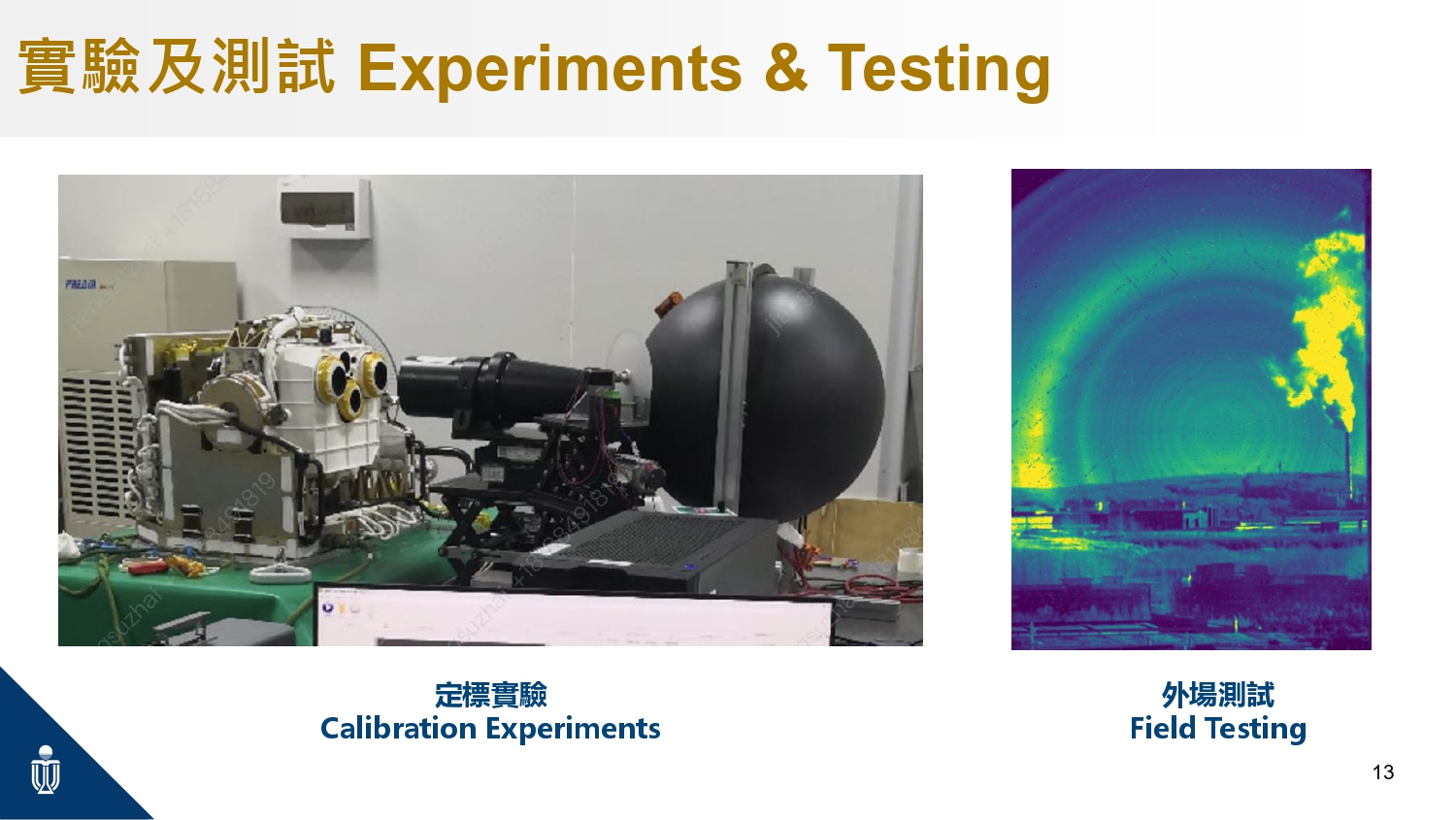
Image of Hong Kong captured by MUSICO's oxygen sensor. The concentric rings visible in the image correspond to different wavelengths. Darker bands indicate wavelengths where oxygen absorption is stronger.
Image of Hong Kong captured by MUSICO's aerosol sensor. The image displays spectral intensity at wavelengths of 440 nm, 685 nm, and 865 nm, which can be used to infer the concentration of aerosol particles in the atmosphere.
Related Projects
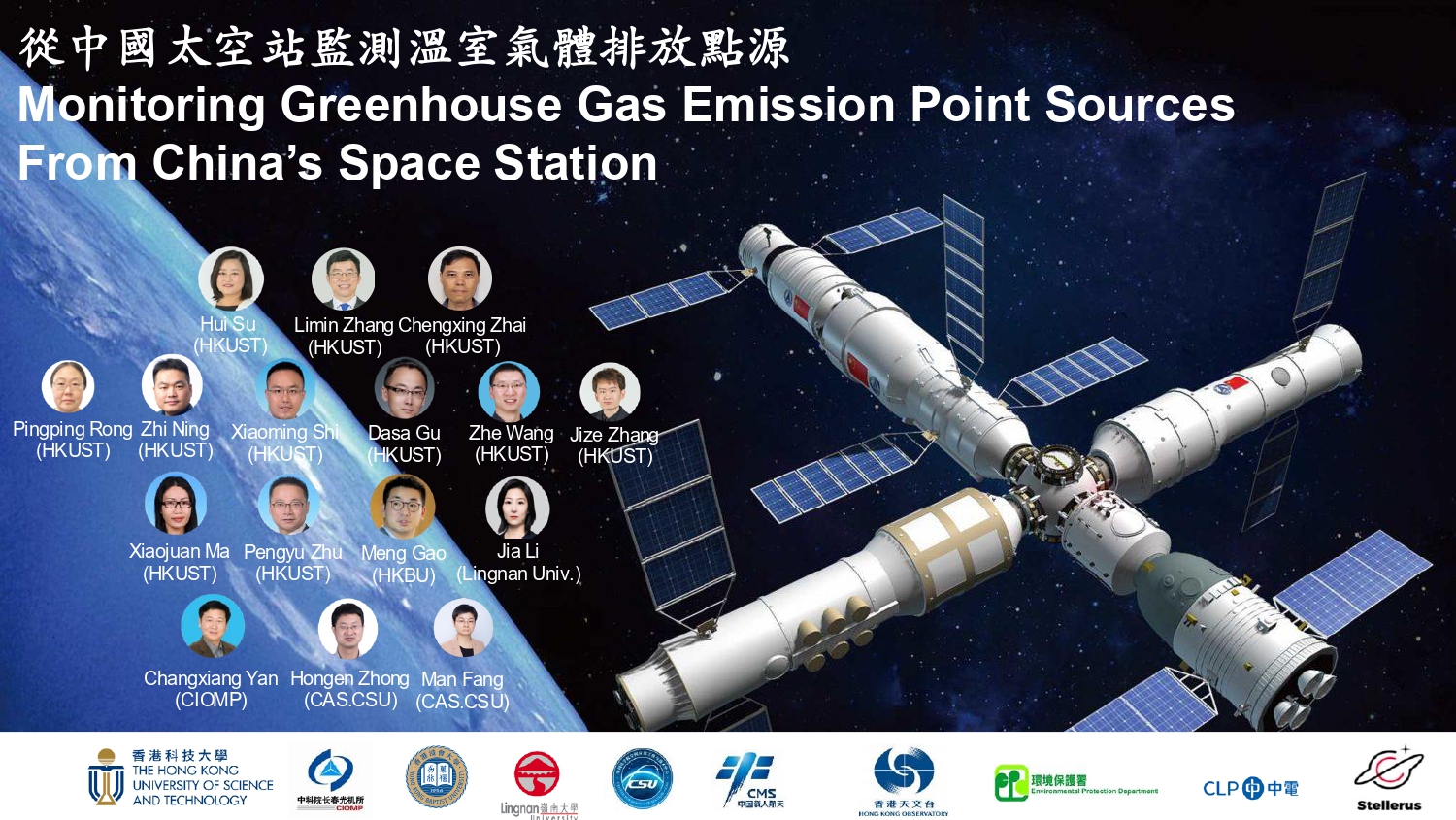
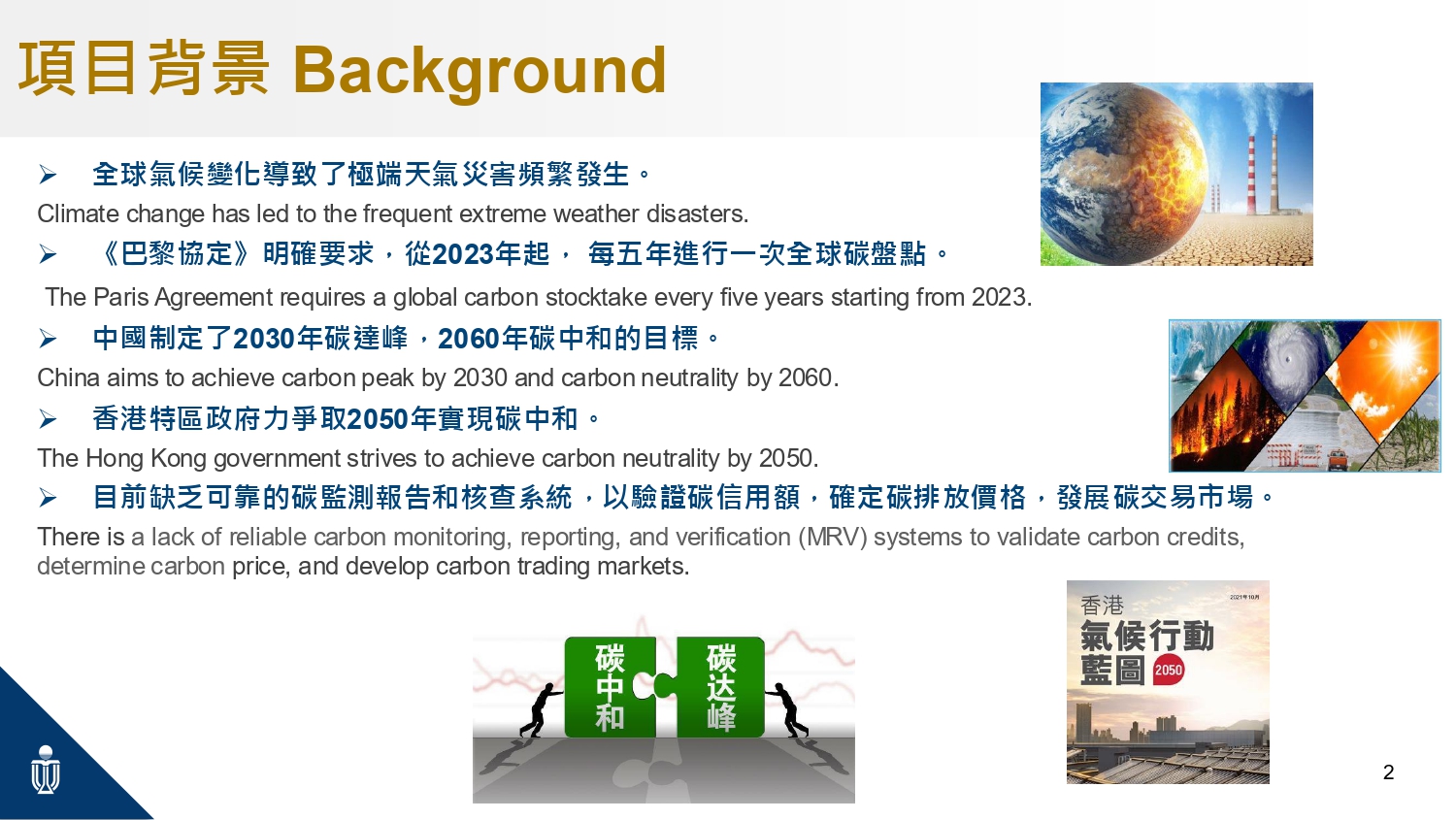
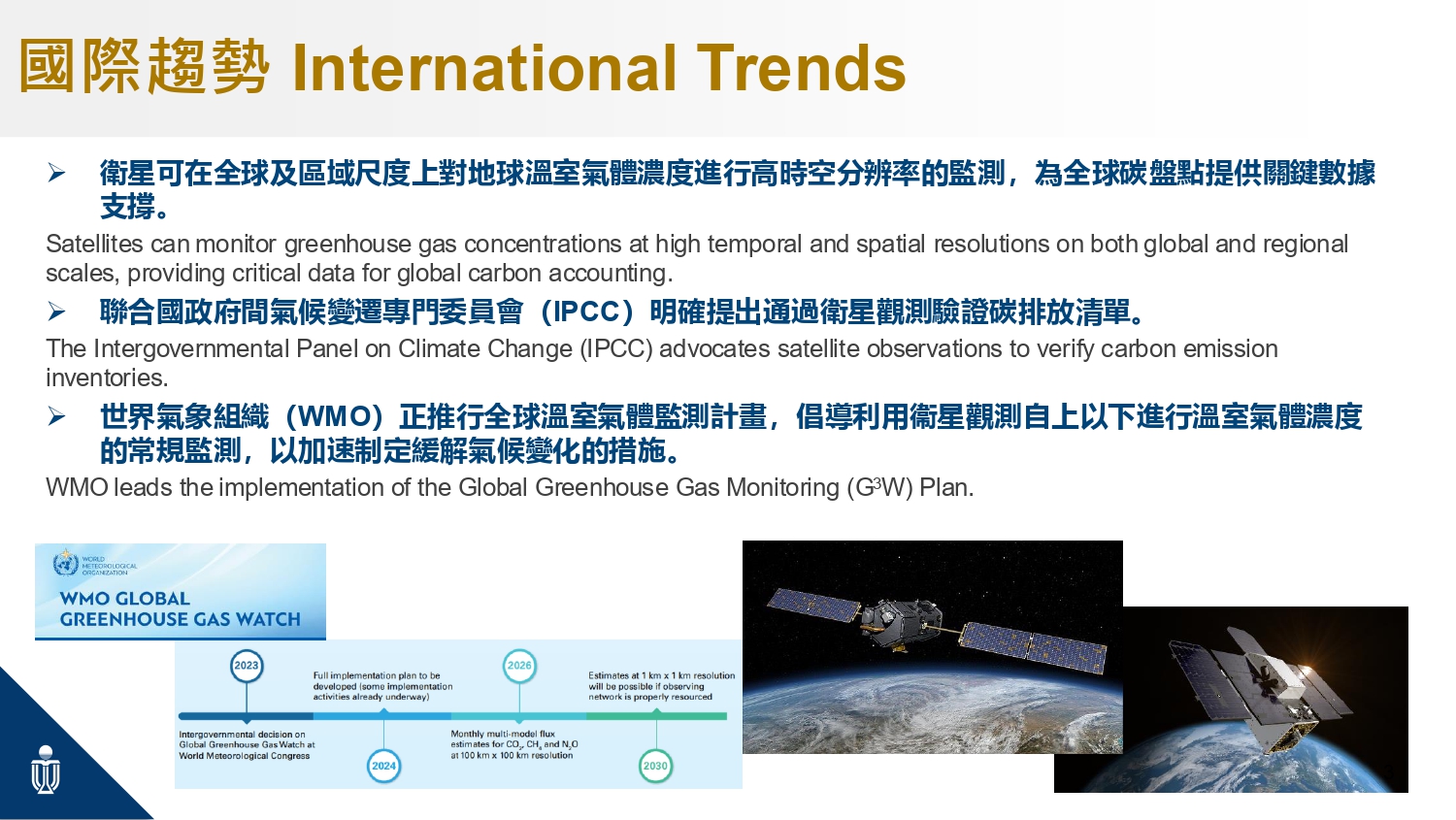
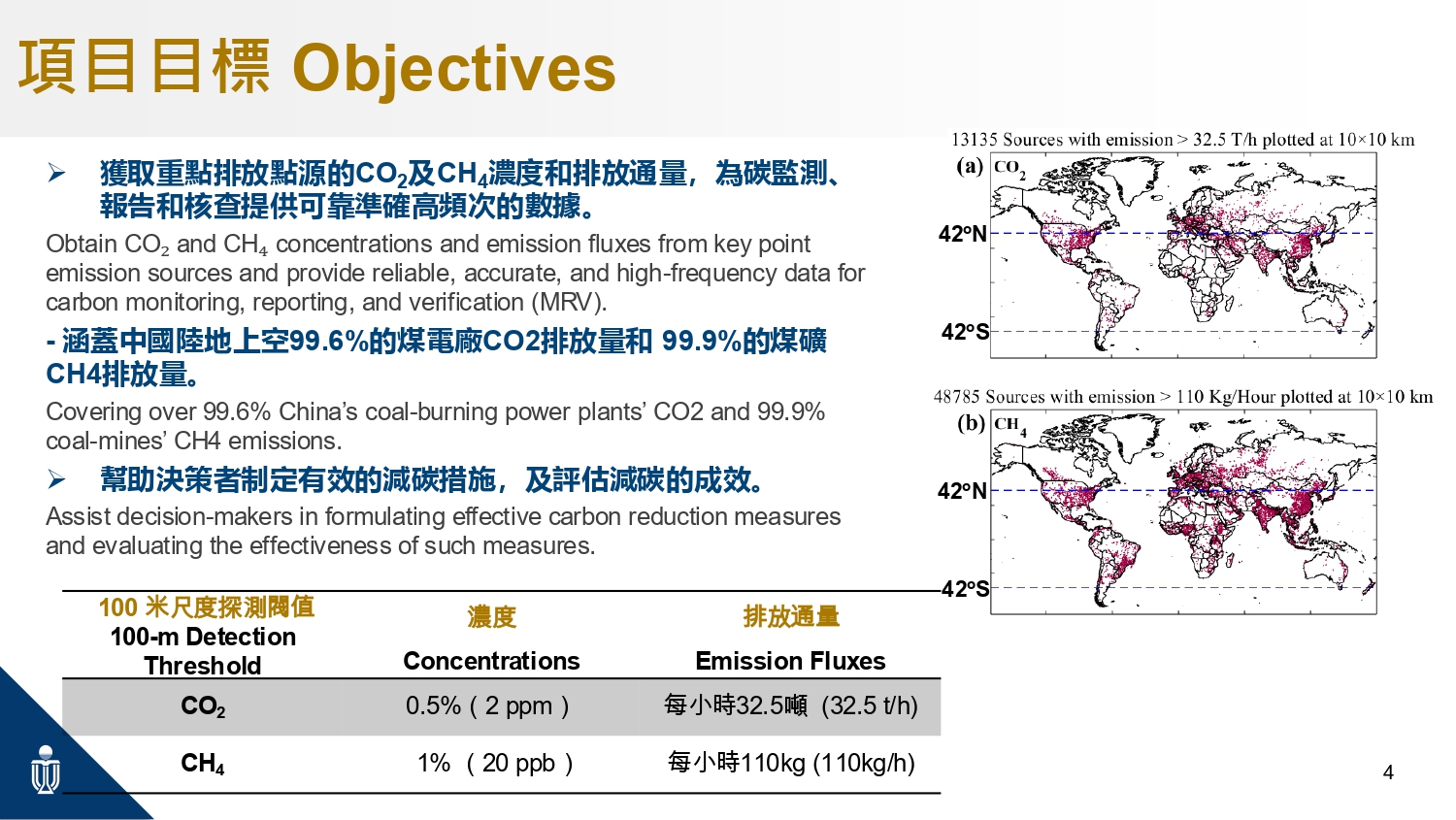
Monitoring Greenhouse Gas Emission Point Sources From China Space Station (ITS/003/24SC)
18/8/2025 - 17/8/2028
HKUST high-resolution greenhouse gases point source monitoring experiment on China's Space Station
Chang’E 8 International Cooperation Project to Develop the Multi-Functional Lunar Surface Robot with Mobile Charging Station
Related News
天舟十號|科大研全港首個載荷「天韻相機」 助探測溫室氣體減排 - hk01
科大「天韻相機」探測儀登國家太空站 精準測量溫室氣體助國家制訂減碳政策 - 有線寬頻 i-CABLE
科大有份研發「天韻相機」載荷升空 冀助力國家實現碳達峰、碳中和承諾 | 無綫新聞 TVB News
科大指天韻相機一次拍照可覆蓋香港及周圍海域 任務別具意義 - Yahoo新聞
【教育】科大「天韻相機」升空 蘇慧教授:香港航天迎來里程碑 - 香港商報
从“天空之眼”到“迷你肾脏” 天舟十号送去的这些“旅客”不简单 - 中國科技網
China launches Tianzhou-10 cargo craft to send space station supplies_英语频道_央视网(cctv.com)