
News
8 Jun 2026
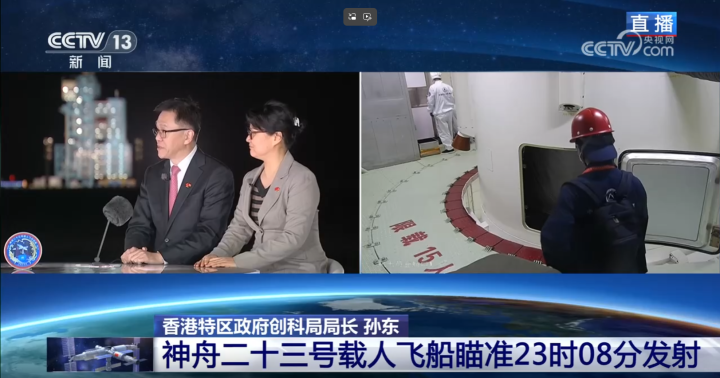
神舟二十三號載人飛船發射前夕,香港特區政府創新科技及工業局局長孫東與香港科技大學太空科學與技術研究院聯席院長高揚教授,在酒泉衛星中心發射台前接受中央廣播電視總台現場訪問的珍貴畫面。
Read more
13 May 2026
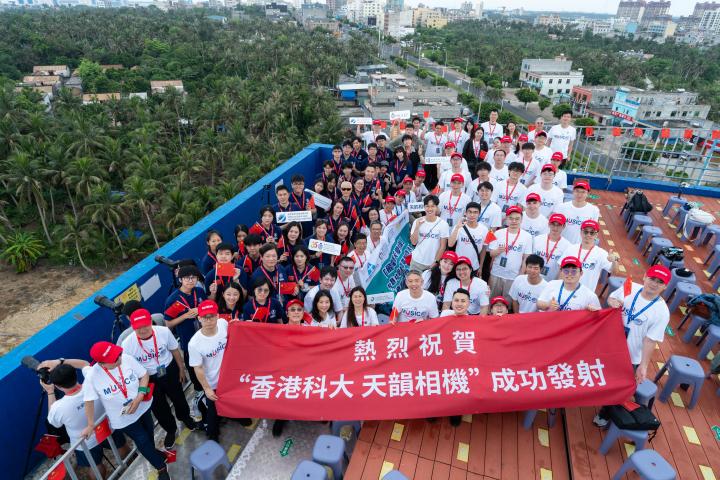
The world’s first lightweight, high‑resolution, high‑precision synergistic observatory for carbon dioxide (CO₂) and methane (CH₄) emission point sources – named “MUSICO”, Multi‑Spectral Imaging Carbon Observatory, led by The Hong Kong University of Science and Technology (HKUST) – was successfully launched aboard the Tianzhou‑10 cargo spacecraft on May 11 and has arrived at China’s Tiangong Space Station. This is not only Hong Kong’s first scientific payload deployed on the national space station, but also a historic breakthrough for the city in the development of high‑end aerospace instruments. The project fully demonstrates Hong Kong’s strong capability to build national‑level cutting-edge scientific payloads, to participate in long‑term space station missions, and to play a key role in addressing global climate change while serving the nation’s strategic “carbon peak and carbon neutrality” goals.
Read more
29 Apr 2026
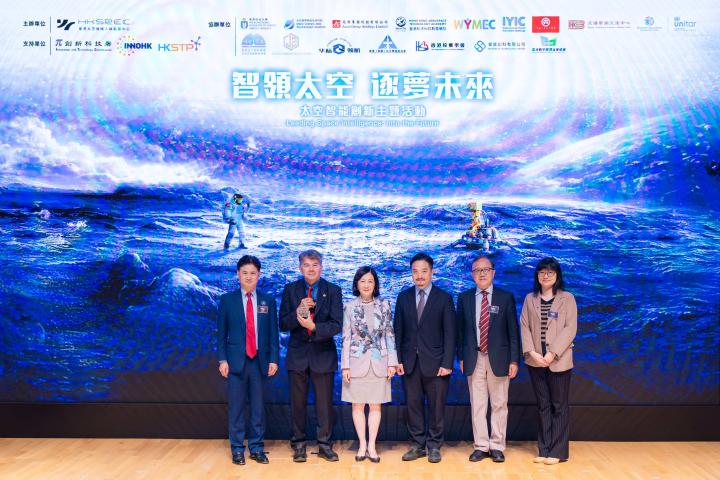
Led by The Hong Kong University of Science and Technology (HKUST) and established under the InnoHK research clusters of the Government of the Hong Kong Special Administrative Region (HKSAR), the Hong Kong Space Robotics and Energy Centre (HKSREC) today hosted the event themed "Leading Space Intelligence: Into the Future." The full-day event brought together representatives from government, industry, academia, research institutions, and the investment community from Hong Kong, the Chinese Mainland and overseas, providing a platform for in-depth exchange on space technology research, cross-regional collaboration, and commercial aerospace applications.
Read more
23 Mar 2026
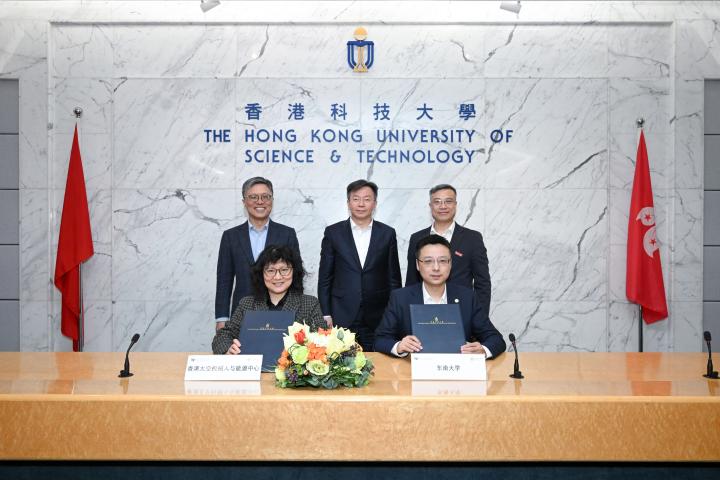
Led by The Hong Kong University of Science and Technology (HKUST), the Hong Kong Space Robotics and Energy Centre (HKSREC), under the InnoHK Research Clusters of the HKSAR Government, has signed a Memorandum of Understanding (MoU) with Southeast University (SEU) to establish a long-term strategic partnership. The collaboration will focus on research innovation, technology transfer, and talent cultivation in the fields of space robotics, deep space energy systems, embodied intelligence, and related interdisciplinary areas, thereby contributing to the nation’s efforts to build a leading aerospace power.
Read more